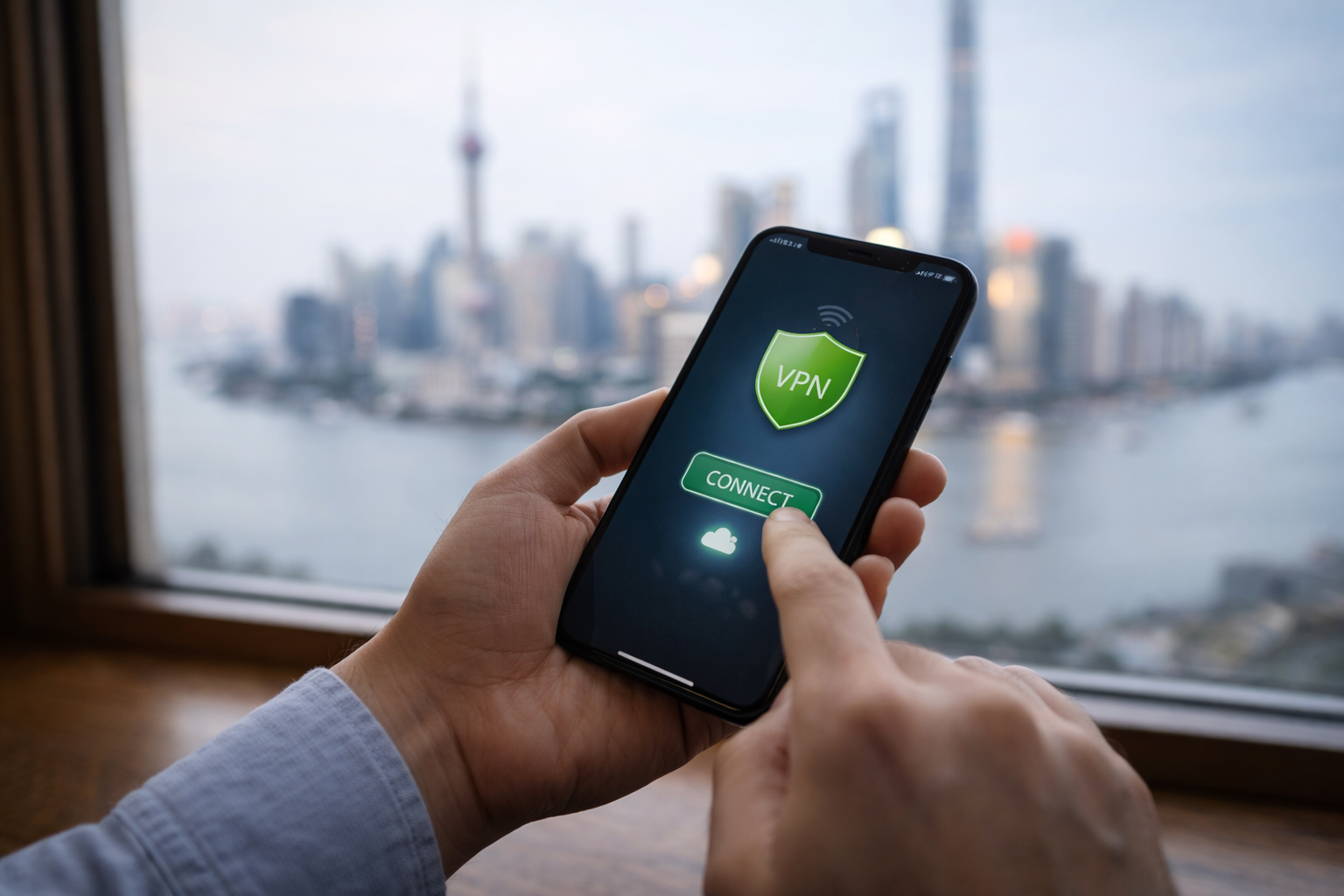
You can use a VPN in China. That part is true.
The problem is that a lot of them don’t work when you actually get there.
People usually realise this the hard way. They land, connect to hotel WiFi, open their usual VPN app, and… nothing. Or it connects for a minute, then drops. Or it works one day and not the next. That’s pretty common.
China’s internet isn’t just restricted, it’s actively filtered. Some VPNs slip through, some don’t, and the ones that do aren’t always consistent. So this isn’t really about finding the “best” VPN in the usual sense. It’s more about finding one that can stay usable long enough to matter.
If you’re travelling or living in China, you don’t want to be troubleshooting this from inside the network. Setup matters, timing matters, and the provider you pick matters more than it would anywhere else.
This guide sticks to what actually works, or at least what tends to work more often than not.
Table of Contents
- Why Most VPNs Don’t Work in China
- What to Look for in a VPN for China
- The 4 Best VPNs for China in 2026
- 1. NordVPN — Reliable enough, with the right settings
- 2. Surfshark — Cheaper, surprisingly capable
- 3. ExpressVPN — Consistent and easier to use
- 4. ProtonVPN — Strong on privacy, slightly more effort
- Quick Comparison
- Do VPNs Even Still Work in China?
- Is Using a VPN Legal in China?
- How to Use a VPN in China
- Common Problems (And What to Do)
- Using the Internet in China Without a VPN
- Free VPNs for China: Don’t Rely on Them
- Making The Right Choice For Your Trip
Why Most VPNs Don’t Work in China
A VPN working in your home country doesn’t mean much once you’re inside China.
The filtering there isn’t passive. It doesn’t sit back and observe. It looks for patterns, flags them, and blocks them. Regular VPN traffic stands out more than people expect, especially if it hasn’t been disguised properly.
A lot of VPNs fall at the first hurdle. They connect fine elsewhere, but in China, the connection gets interrupted or never establishes at all. Sometimes it looks like it’s working for a moment, then it gets cut off. Other times it just refuses to connect, no matter how many servers you try.

There’s also the issue of consistency. A VPN might work one week and stop the next. Providers get detected, servers get blocked, and things change without much warning. That’s why you’ll see people recommending the same handful of services over and over. Not because they’re perfect, but because they tend to adapt faster.
Another thing people underestimate is how quickly standard VPN protocols get recognised. If a provider isn’t doing anything to hide or disguise that traffic, it becomes easy to filter out.
So when people say “my VPN works in China,” what they usually mean is “it worked for me, at that time.” That’s about as stable as it gets.
What to Look for in a VPN for China
You’re not looking for features here in the usual sense. You’re looking for anything that helps the connection stay up.
Obfuscation (or stealth mode)
This is the big one. It hides the fact that you’re using a VPN in the first place. Without it, your traffic can stand out and get blocked quickly. Different providers call it different things, but if it’s not there, the VPN usually struggles in China.
Reliable server rotation
Servers get blocked. That’s normal. What matters is how quickly a VPN replaces or rotates them. The better ones don’t leave you stuck on a dead server for long. There’s always another option, even if you have to try a couple.
Stable connections, not just fast ones
Speed matters, but stability matters more. A fast connection that drops every few minutes isn’t useful. In China, it’s often better to have something slightly slower that stays connected.
Works on restricted networks
Hotel WiFi, public networks, even some private connections can behave differently. A VPN that works on one network might fail on another. The more adaptable it is, the less time you spend switching settings.
Set it up before you arrive
This catches people out all the time. VPN websites are often blocked inside China, so downloading or setting one up after you arrive can be difficult. Install it, test it, and have it ready beforehand. Ideally, have a backup as well.
That’s really the pattern. You’re not chasing the most features. You’re trying to avoid the ones that break when you need them.
The 4 Best VPNs for China in 2026
There isn’t a perfect VPN for China. The ones that work tend to work most of the time, not all the time. What you’re really choosing here is the one that fails the least often.
1. NordVPN — Reliable enough, with the right settings

What it does well
- Obfuscated servers designed to get around VPN detection
- Strong privacy setup with audited no-logs policy
- Generally fast once connected
- Large server network, so there are fallback options
Where it falls short
- Doesn’t always connect on the first try
- Requires using specific servers or settings
- Can feel inconsistent during tighter crackdowns
NordVPN sits in that middle ground where it works often enough to rely on, but not effortlessly. You usually need to use its obfuscated servers to get through, which adds an extra step.
Once it connects, it tends to be stable and fast enough for everyday use. Streaming, browsing, messaging, all fine. The issue is getting that connection in the first place, especially during periods where restrictions tighten.
It’s often recommended as a VPN for China because it balances privacy, speed, and censorship resistance reasonably well. Not perfect, but it holds up better than most.

Click Here To Get Up To 73% Off NordVPN Now
2. Surfshark — Cheaper, surprisingly capable
What it does well
- NoBorders mode helps bypass restrictions
- Lower price than most competitors
- Unlimited device connections
- Simple apps that don’t need much setup
Where it falls short
- Speeds can vary more than others
- Occasional connection drops
- Not as consistent during heavy blocking periods
Surfshark tends to surprise people. It’s cheaper, but still manages to work in China more often than you’d expect.
The NoBorders mode is the key feature here. It adjusts how the VPN behaves when it detects a restricted network, which helps it slip through where normal connections fail. It’s not flawless, but it’s one of the reasons Surfshark shows up so often in “best VPN for China” lists.
If you’re travelling with multiple devices, or sharing with someone else, the unlimited connections help. Just expect the experience to vary a bit depending on timing and location.
3. ExpressVPN — Consistent and easier to use
What it does well
- Works in China with minimal setup
- Strong reliability compared to most VPNs
- Fast, stable connections once established
- Simple apps that don’t require tweaking
Where it falls short
- More expensive than most alternatives
- Fewer advanced configuration options
- Can still get blocked occasionally
ExpressVPN leans more toward consistency than flexibility. It’s often the one people recommend if you don’t want to spend time adjusting settings or troubleshooting connections.
In testing, it tends to connect more easily than many competitors, and once it’s up, it stays up. That alone makes it appealing in China, where unreliable connections are the main frustration.
You are paying more for that simplicity, though. It’s not the cheapest option, and it doesn’t offer as many advanced tweaks. For most users, that trade-off is worth it.
4. ProtonVPN — Strong on privacy, slightly more effort
What it does well
- Stealth protocol designed to bypass censorship
- Strong privacy reputation and open-source apps
- Good security features overall
- Works reliably on paid plans
Where it falls short
- Free version doesn’t work well in China
- Slightly more complex to configure
- Speeds can be less consistent
ProtonVPN approaches things from a privacy-first angle. It’s built with censorship resistance in mind, and its stealth protocol is designed to hide VPN traffic in restrictive environments.
The important detail is that the free plan isn’t enough here. If you’re looking for a VPN that works in China, you’ll need the paid version. That’s where it becomes much more usable.
It’s not as plug-and-play as something like ExpressVPN, but if you’re comfortable spending a bit of time setting it up, it can be a solid option.
Quick Comparison
| VPN | Reliability in China | Ease of Use | Obfuscation | Price Level |
|---|---|---|---|---|
| NordVPN | High (with setup) | Moderate | Yes | Mid |
| Surfshark | Moderate | Easy | Yes | Low |
| ExpressVPN | High | Very easy | Built-in | High |
| ProtonVPN | Moderate–High | Moderate | Yes | Mid |
None of these are guaranteed to work 100% of the time. That’s the reality of using a VPN in China.
What matters is that they work more often than most, and recover faster when something breaks.
Do VPNs Even Still Work in China?
Yes, VPNs still work in China. Just not in the way people expect.
If you’re imagining a stable, always-on connection like you’d get at home, it’s not quite like that. Even the best VPN for China can be inconsistent. Some days it connects straight away. Other days you might need to switch servers, change settings, or try again later.
That doesn’t mean VPNs are useless. It just means they’re working against an active system that’s designed to block them.
The Great Firewall isn’t static. It changes. Providers get detected, servers get blocked, and then new ones replace them. The VPNs that still work in China are the ones that keep adapting. That’s why the list of reliable options doesn’t change much. There aren’t many that can keep up.
Timing also plays a role. During certain periods, especially around major events or holidays, restrictions can tighten. Connections that worked the week before might suddenly struggle.
So the honest answer is this: yes, you can use a VPN in China, and many people do every day. But you should expect some friction. It’s not broken, it’s just not seamless.
If you go in expecting that, and you choose a VPN that’s known to work in China, you’ll avoid most of the usual frustration.
Is Using a VPN Legal in China?
This is where things get a bit unclear, and you won’t find a single clean answer.
Technically, only government-approved VPN services are fully legal in China. Those are usually aimed at businesses, not individuals, and they don’t provide the same kind of open access people are looking for.
For personal use, it sits in a grey area.
In practice, millions of people use a VPN in China anyway. Expats, travellers, students, remote workers. It’s not unusual. Most of the time, individuals aren’t being targeted for simply using a VPN to access blocked websites or services.
What the authorities tend to focus on is distribution or commercial use. Selling VPN services, running them, or using them at scale is a different situation entirely.
That said, it’s still something to be aware of. Laws and enforcement can shift, and what’s tolerated one year might be treated differently the next.
So the realistic view is this: using a VPN in China as an individual is common, but not officially encouraged. It’s widely done, just not something that’s openly supported.
How to Use a VPN in China
Most of the problems people run into happen before they even connect.
The first rule is simple. Set everything up before you arrive. Download the VPN, install it on all your devices, log in, and test it properly. Don’t assume you can sort it out once you’re inside China. VPN websites are often blocked, and app stores don’t always show what you need.
It’s also worth having a backup. Even the best VPN for China can stop working temporarily, so having a second option already installed saves a lot of hassle.
Once you’re there, the process itself is straightforward:
- Open your VPN and connect before doing anything else
- Use obfuscated or “stealth” servers if available
- If a server doesn’t work, switch rather than retrying the same one
- Give it a few seconds to stabilise before loading anything
If it connects, you’re usually fine to carry on as normal. If it doesn’t, changing servers or protocols often fixes it.
One thing people forget is consistency. If you disconnect and reconnect frequently, you’ll notice more issues. Staying connected tends to be smoother than constantly switching.
It’s not complicated, but it’s not completely hands-off either. A bit of preparation and a bit of patience goes a long way.
Common Problems (And What to Do)
Things will break at some point. That’s not a maybe, it’s part of using a VPN in China.
The difference is whether you expect it, or end up stuck staring at a spinning “connecting” screen wondering what went wrong.
It won’t connect at all
This is probably the most common one. You open the app, hit connect, and nothing happens. Or it times out over and over. Usually, it’s the server. Try a different location, preferably one labelled for restricted regions or obfuscated traffic. If that doesn’t work, switch protocols if your VPN allows it.
It connects, then drops after a minute
This tends to happen when the connection gets detected after it’s established. It’s frustrating because it gives you a false start. In this case, switch to a different server straight away. Reconnecting to the same one rarely fixes it.
Speeds are painfully slow
Some slowdown is normal. But if pages barely load or downloads stall, it’s usually congestion or distance. Try a closer region, or just cycle through a few options until one feels usable. There’s no perfect pick here, it’s more trial and error.
Certain apps or sites still don’t load
Sometimes the VPN is connected, but specific services still won’t work. This can happen with stricter filtering. Switching servers often helps. Occasionally, you just have to try again later.
It worked yesterday, now it doesn’t
This one catches people off guard. Nothing changed on your side, but suddenly it stops working. That’s normal in China. Servers get blocked without warning. Usually the provider catches up and replaces them, but there can be a gap.
Most of the fixes are simple. Try another server. Change a setting. Wait and try again later.
The main thing is not to assume it’s permanently broken. More often than not, it’s temporary.
Using the Internet in China Without a VPN
You can get by without a VPN in China. Plenty of people do. It just feels like using a different version of the internet.
Most Western sites and apps won’t load. Google, YouTube, Instagram, WhatsApp, a lot of news sites, all blocked. You stop reaching for them after a while, mostly because there’s no point.
Instead, everything runs through local apps, and the big one is WeChat.
It’s not really optional. You use it for messaging, but also for things that have nothing to do with chatting. Booking train tickets, paying in shops, ordering food, scanning QR codes for entry, even basic services like topping up your phone. It replaces a lot of things you’d normally spread across different apps.
If you’re not set up on WeChat, you notice it pretty quickly. Payments in particular. Cash isn’t used as much as people expect, and cards don’t always work smoothly. Most transactions go through WeChat Pay or Alipay.
Search is another adjustment.
Baidu is the main search engine, and it works, but it doesn’t feel the same. Results are more limited, more local, and sometimes harder to navigate if you’re not used to it. Finding straightforward answers can take longer, especially if you’re searching in English. It’s usable, just not always efficient.
So yes, you can use the internet in China without a VPN. It’s functional, and for day-to-day things, it’s often enough.
But it’s a smaller version of the web, shaped around local services. Whether that’s fine or frustrating depends on what you’re used to.
Free VPNs for China: Don’t Rely on Them
This is one of those things that sounds reasonable until you actually try it.
A free VPN for China might work in theory. In practice, most of them don’t work at all.
The main issue is resources. Getting a VPN to work in China takes constant updates. Servers need to be replaced, traffic needs to be disguised, and connections need to adapt to filtering that changes all the time. Free VPNs don’t have the infrastructure for that. They don’t rotate server IPs fast enough, and once those IPs are blocked, that’s usually the end of it.
Even when a free VPN does connect, it’s rarely stable. You might get a working connection for a short time, then lose it without warning. Or it works on one network but not another. That kind of inconsistency is the opposite of what you need in China.
There are also the usual trade-offs.
- Very limited data caps
- Slower speeds, especially at peak times
- No access to obfuscation or stealth features
- Weak or missing security features
And then there’s the part people tend to overlook. A lot of free VPNs make money by logging data or sharing it with third parties. In a normal situation, that’s already questionable. In China, where you’re relying on a VPN for privacy, it becomes a bigger problem.
There are a couple of exceptions. Some free plans from paid providers can work occasionally, but even those are limited. One example is Windscribe, which has had some success getting through the firewall, but even then, it’s not something you’d want to depend on long-term.
So yes, you can try a free VPN in China.
But if you actually need a VPN that works in China, something you can rely on day to day, free options usually fall apart pretty quickly.
Making The Right Choice For Your Trip
Finding the best VPN for China isn’t really about features or branding. It’s about what still works when everything else doesn’t.
A lot of VPNs look good on paper. Fast speeds, strong encryption, long server lists. None of that matters much if the connection won’t hold once you’re inside China. The ones that make this list are here because they manage to stay usable more often than most, even if they’re not perfect.
That’s the part worth remembering. No VPN works flawlessly in China. Connections drop, servers get blocked, things change without warning. The goal isn’t perfection, it’s reliability over time.
If you’re planning ahead, set everything up before you arrive. Give yourself a backup option. And expect a bit of trial and error, especially in the first few days.
Once it’s working, though, it makes a big difference. Access opens up, things feel familiar again, and you’re not constantly running into blocked pages.
That’s really what you’re paying for. Not invisibility, not guarantees, just a connection that works when you need it to.
Leave a Reply